01
Customer insight
Findings from real interviews, and a problem reframed by what they heard.

A two-week technical programme for non-technical students. They set up a professional development environment, build with AI, deploy a live product, test it with real users and pitch it. Sessions run three hours each weekday, building starts on Day 1, and no coding experience is needed.

University programmes.
Students work alone or in teams, on problems they choose and verify themselves. By the final day each has evidence, a spec and a live product to show for it.
01
Findings from real interviews, and a problem reframed by what they heard.
02
A clear definition of the smallest useful product, with a reason behind every decision.
03
Built with Claude and Claude Code, live at a real address, with first user feedback.
04
Delivered at an open session to faculty, peers and investors.
What students learn.
This is not a pitch workshop. Students learn the working practice of a modern product builder: set up the environment, build with AI, publish, test and iterate. They learn Claude, for concepts, briefs and problem-solving, and Claude Code, for the build, as two separate skills.
The method.
Every session pairs a method topic with a tech topic, so what students build is shaped by what customers tell them. Students talk to real customers every day, outside the sessions, and bring what they heard back to the room.
Talk to real potential customers, before and during the build.
Separate what confirmed your assumptions from what surprised you.
Define the problem and the smallest product that addresses it. Decide what gets cut.
Build with AI tools, deploy, and put the product in front of users.
Format.
Sessions run in the morning or afternoon to suit student timetables, and two cohorts can run in parallel. Every session opens with a debrief of the previous day's customer conversations, then moves into a method topic, a tech topic and a hands-on build block.
The final day is open to guests: faculty, students from across the university, investors and the wider startup community. Format and timings are agreed with each university, as are programme dates.
Your instructor.
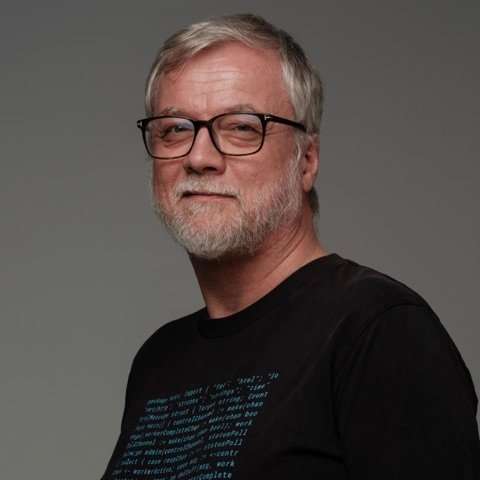
Erik is a serial entrepreneur and product builder based in Singapore, with over two decades in fintech, digital product design and venture building across Europe and Asia. He builds and deploys real products with AI tools such as Claude Code, without a traditional coding background, and created Humanistic Thinking, the framework behind the programme. He has taught at universities as an adjunct lecturer at SIT and BI Norwegian Business School, and as a guest lecturer at institutions including NUS.